
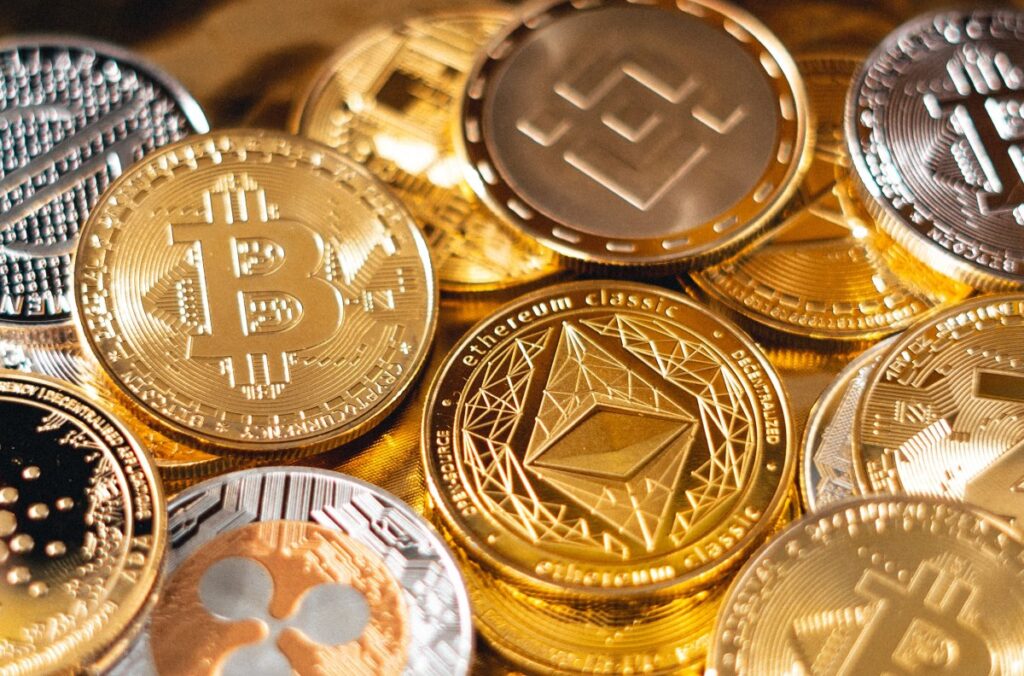
Cryptocurrency has become an increasingly visible part of the investment landscape in the United States.
Bitcoin, Ethereum and numerous other digital assets are available to individual investors, but choosing which cryptocurrency to buy can be challenging.
There is no cryptocurrency that is guaranteed to produce a profit.
Digital assets can experience significant price fluctuations, and an investment that performs well during one period can decline substantially during another.
For this reason, identifying the “best” cryptocurrency is less about finding a guaranteed winner and more about understanding the characteristics, risks and potential use cases of different digital assets.
For US investors considering cryptocurrency, the most important question is not simply which coin has increased the most.
It is whether an asset fits their financial goals, risk tolerance and overall investment strategy.
What Makes a Cryptocurrency Worth Considering?
Before choosing a digital asset, investors should look beyond its price.
Several factors can help when evaluating a cryptocurrency.
Market capitalization
Market capitalization represents the total market value of an asset’s circulating supply.
Larger cryptocurrencies may have greater liquidity and broader adoption, although market capitalization does not eliminate investment risk.
Adoption
Consider how widely the cryptocurrency is actually used.
Look at factors such as:
- Number of users
- Developer activity
- Transaction activity
- Institutional interest
- Real-world applications
Technology
Understanding the underlying technology can help investors evaluate what makes an asset different from its competitors.
Security
Investors should consider the history of the network, its security model and any significant incidents.
Supply
Some cryptocurrencies have fixed or limited supplies, while others have different issuance models.
Understanding supply dynamics can help investors better understand how the asset works.
Bitcoin: The Most Established Cryptocurrency
Bitcoin is generally the first cryptocurrency that investors encounter.
It was introduced in 2009 and has become the largest cryptocurrency by market capitalization.
One reason investors consider Bitcoin is its relatively long history compared with newer digital assets.
Bitcoin is often discussed as a digital asset that may function as a store of value, although its price remains highly volatile.
Why investors consider Bitcoin
Potential advantages include:
- Long operating history
- High market liquidity
- Broad global recognition
- Significant institutional interest
- Large ecosystem
Risks
Bitcoin is not risk-free.
Its price can experience major declines, and investors should be prepared for substantial volatility.
Ethereum: More Than a Cryptocurrency
Ethereum is another major digital asset that has become an important part of the cryptocurrency ecosystem.
Unlike Bitcoin, Ethereum is closely associated with a programmable blockchain that supports applications and smart contracts.
The Ethereum network is used by various decentralised applications and digital asset projects.
Why investors consider Ethereum
Potential reasons include:
- Large developer ecosystem
- Smart contract functionality
- Broad blockchain usage
- Established market presence
However, Ethereum remains a volatile asset and can experience significant price declines.
Solana and Other Major Networks
Some investors also consider alternative blockchain networks such as Solana.
These networks aim to provide different approaches to transaction speed, scalability and application development.
However, newer or smaller networks can involve additional risks.
Investors should research:
- Network reliability
- Developer activity
- Adoption
- Competition
- Token economics
- Security history
A cryptocurrency being popular on social media does not necessarily mean that it represents a strong long-term investment.
Stablecoins Are Different
Stablecoins should not necessarily be evaluated in the same way as Bitcoin or other volatile cryptocurrencies.
They are generally designed to maintain a relatively stable value, often in relation to a reference asset such as the US dollar.
Their purpose is often more closely related to payments, trading and transferring value within digital-asset ecosystems.
However, “stable” does not mean risk-free.
Investors should understand how a particular stablecoin maintains its value and what risks are associated with the issuer and underlying mechanisms.
Should Beginners Buy Smaller Cryptocurrencies?
Smaller cryptocurrencies can sometimes experience dramatic price increases.
They can also experience dramatic losses.
A smaller market capitalization may mean lower liquidity and greater price volatility.
For beginners, understanding this difference is important.
A cryptocurrency with a lower price per token is not necessarily “cheaper” than Bitcoin or Ethereum.
The number of coins in circulation also matters when evaluating an asset’s total market value.
Don’t Choose Crypto Based on Price Alone
One of the most common mistakes beginners make is looking at the price of an individual coin.
For example, a cryptocurrency priced at $1 may appear inexpensive compared with one priced at $50,000.
But the individual token price tells you very little by itself.
Market capitalization, supply and demand are much more useful metrics when comparing digital assets.
Consider Your Investment Time Horizon
Before investing, ask when you expect to need the money.
Cryptocurrency can be highly volatile over short periods.
If you need the money for rent, tuition, a home purchase or another near-term expense, exposing it to a highly volatile asset can create unnecessary risk.
Long-term investment decisions should be aligned with long-term goals.
Consider How Much Crypto You Actually Need
The question may not be:
“Which cryptocurrency should I invest in?”
It may instead be:
“How much cryptocurrency exposure is appropriate for my financial situation?”
An investor with an emergency fund, manageable debt and diversified investments may have a different capacity for risk than someone living paycheck to paycheck.
There is no universal cryptocurrency allocation that works for every investor.
Diversification Still Matters
Investors should be careful about putting their entire investment portfolio into cryptocurrency.
Even if you believe strongly in digital assets, cryptocurrency remains one asset class.
A broader portfolio can potentially reduce the impact of a decline in any single investment.
Diversification does not guarantee profits or eliminate losses, but it can reduce concentration risk.
Avoid Chasing Past Performance
A cryptocurrency that increased 500% in the past is not automatically the best investment today.
Past performance does not guarantee future results.
Investors should evaluate current fundamentals, valuation, adoption, risks and their own financial situation rather than assuming that yesterday’s biggest winner will become tomorrow’s biggest winner.
Watch Out for Crypto Hype
Cryptocurrency markets are heavily discussed on social media.
Investors may encounter claims about:
- “The next Bitcoin”
- Guaranteed returns
- Secret coins
- Instant wealth
- Celebrity endorsements
- Limited-time opportunities
These claims should be treated with skepticism.
A professional-looking website or large social media following does not guarantee that an investment is legitimate.
Understand the Tax Implications
US cryptocurrency investors should also consider taxes.
Depending on the circumstances, selling, exchanging or otherwise disposing of digital assets can create tax-reporting obligations.
Keep records of:
- Purchases
- Sales
- Exchanges
- Dates
- Cost basis
- Transaction fees
Tax rules can be complicated and can change.
For significant cryptocurrency activity, investors may want to consult a qualified tax professional and review current guidance from the Internal Revenue Service.
Consider Security Before Buying
Choosing the asset is only one part of cryptocurrency investing.
Security is equally important.
Investors should carefully protect:
- Exchange accounts
- Wallets
- Passwords
- Private keys
- Recovery information
Enable strong security measures and be cautious about unsolicited messages requesting access to your account or wallet.
A Simple Way to Compare Cryptocurrencies
Before investing in any cryptocurrency, ask the following questions:
What problem does it solve?
How widely is it being used?
Who develops and maintains it?
How does its supply work?
How secure is the network?
How liquid is the asset?
What could cause its value to decline?
Can I afford to lose the money I invest?
If you cannot explain why you are buying an asset, consider researching it further before investing.
A Possible Beginner Approach
A beginner who wants cryptocurrency exposure does not necessarily need to own dozens of different tokens.
A simpler approach may be easier to understand and monitor.
Some investors choose to focus on established digital assets such as Bitcoin and Ethereum rather than trying to identify dozens of smaller projects.
Others may decide that cryptocurrency should represent only a limited portion of their broader investment portfolio.
The appropriate approach depends on the individual’s financial circumstances and risk tolerance.
What About Meme Coins?
Meme coins can attract enormous attention during periods of market excitement.
Some have generated spectacular short-term gains.
However, their prices can also be extremely volatile and heavily influenced by sentiment and speculation.
Investors should not confuse popularity with fundamental value.
If you choose to research speculative digital assets, understand that the risk can be considerably higher.
Final Thoughts
There is no single cryptocurrency that can objectively be called the best investment for every person.
Bitcoin and Ethereum are among the most established digital assets, while other networks may offer different technologies and potential use cases.
But choosing a cryptocurrency should never be based solely on popularity, social media hype or recent price increases.
For US investors, a sensible approach is to understand the technology, research adoption, consider market capitalization and supply, protect digital assets and determine how much risk fits within the broader financial plan.
Most importantly, never invest money that you cannot afford to lose simply because you believe a cryptocurrency is going to rise.
The best cryptocurrency investment is not necessarily the one with the biggest potential headline return.
It is the investment decision that fits your financial goals, risk tolerance and long-term strategy.