In personal finance, few strategies are as universally recommended—and as frequently underestimated—as building an emergency fund. Whether you are paying off student loans, investing in the stock market, or saving for a down payment on a home, a dedicated liquid cash reserve serves as the foundational pillar of your entire financial system.
Without an emergency fund, even a well-constructed financial plan can collapse under the weight of an unexpected life event. Understanding why an emergency fund matters, how to calculate your target amount, where to store it, and how to build it efficiently will transform your relationship with money.
What Is an Emergency Fund (and What Is It Not?)
An emergency fund is a liquid pool of money set aside exclusively to cover major, unbudgeted, and urgent expenses. Its primary purpose is not wealth generation or capital appreciation, but capital preservation and risk mitigation.
The Core Distinction: An emergency fund is self-insurance. It is not an investment portfolio, nor is it a slush fund for planned large purchases like vacations, holiday shopping, or routine car maintenance.
+-------------------------------------------------------------------+
|                       EMERGENCY FUND ROLE                         |
+-------------------------------------------------------------------+
|  [ Unexpected Events ] ---> ( Emergency Fund Buffer ) ---> Safe   |
|  [ Medical, Job Loss ]                                   Finances |
|                                                                   |
|  WITHOUT BUFFER:                                                  |
|  [ Unexpected Events ] ---> [ High-Interest Debt / Liquidate ]    |
+-------------------------------------------------------------------+
3 Core Reasons an Emergency Fund Is Non-Negotiable
1. It Breaks the Cycle of High-Interest Debt
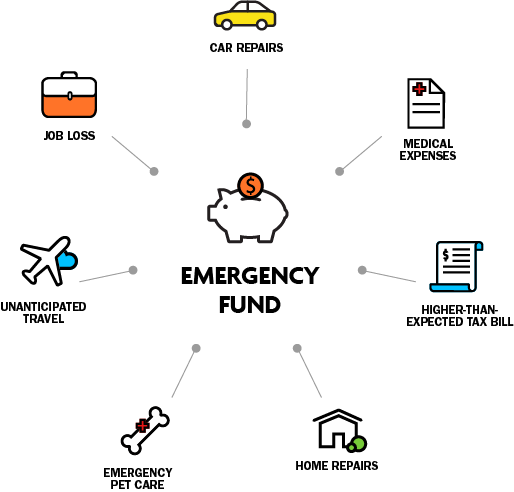
When life throws a curveball—such as an unexpected medical bill or urgent plumbing repair—people without cash reserves usually turn to high-interest credit cards, personal loans, or 401(k) loans. Carrying a balance at 20% APR or higher creates a compounding cycle of debt that can take years to recover from. An emergency fund allows you to absorb these hits with zero debt interest.
2. It Protects Your Long-Term Investments
If all your excess cash is tied up in the stock market or real estate, a sudden financial demand forces you to sell assets to raise capital. If that emergency coincides with a market downturn, you are forced to lock in realized losses at the worst possible time. An emergency reserve buys your long-term portfolio time to recover undisturbed.
3. It Delivers Psychological Peace of Mind
Financial stress is one of the leading sources of personal anxiety. Knowing you have three to six months of expenses safely tucked away changes your mental baseline. It transforms an unexpected $1,500 car repair from a catastrophic crisis into a minor inconvenience.
How Much Do You Really Need?
The traditional rule of thumb recommends saving 3 to 6 months’ worth of essential living expenses. However, a single target does not fit every household. The ideal size of your fund depends heavily on your income stability, health, and dependents.
Calculating Essential Expenses vs. Lifestyle Expenses
When calculating your emergency target, focus solely on must-have survival costs, not your current gross income or total discretionary spending.
| Essential Expenses (Include) | Non-Essential Spending (Exclude) |
|---|---|
| Rent or mortgage payments | Dining out and food delivery |
| Utilities (electricity, water, gas, internet) | Streaming subscriptions & entertainment |
| Groceries and basic household goods | Vacations & travel savings |
| Minimum debt obligations | Luxury shopping & hobbies |
| Insurance premiums (health, auto, home) | Gym memberships |
| Basic transportation & fuel costs | Personal leisure funds |
Customizing Your Savings Target
   Single Income / Freelancer / Variable Income
   -----------------------------------------------> 6 to 12 Months

   Dual Income / Salaried / High Job Stability
   -----------------------------------------------> 3 to 6 Months
- 3 Months of Expenses: Ideal for dual-income households with stable salaried jobs, no dependents, and low debt burdens.
- 6 Months of Expenses: Recommended for single-income households, families with dependents, or those with moderate job volatility.
- 9 to 12 Months of Expenses: Best for self-employed individuals, freelancers, commission-based sales workers, or those working in niche industries with long hiring cycles.
Where Should You Store Your Emergency Fund?
The ideal account for an emergency fund must balance two primary characteristics: liquidity (how fast you can access the money) and safety (zero risk of capital loss).
                       LIQUIDITY & SAFETY MATRIX
High Liquidity / Low Risk                     Low Liquidity / High Risk
[ High-Yield Savings (HYSA) ]  =====>  [ Stocks / Cryptocurrencies ]
[ Money Market Accounts (MMA) ] =====>  [ Real Estate / Private Equity ]
           (Ideal Spot)                            (Avoid)
Recommended Vehicles
- High-Yield Savings Accounts (HYSAs): Offered primarily by online banks, HYSAs pay competitive interest rates while offering full liquidity and FDIC/NCUA insurance protection. This ensures your capital keeps pace with inflation far better than a traditional brick-and-mortar savings account.
- Money Market Accounts (MMAs): Similar to HYSAs, these accounts often include check-writing privileges or debit card access, offering immediate availability during urgent situations.
- Short-Term Treasury Bills / Certificates of Deposit (CD) Ladders: For larger funds (e.g., 6 to 12 months), a portion can be kept in staggered short-term yield products to maximize return while maintaining rolling access.
What to Avoid
- Individual Stocks or ETFs: Market volatility can erode your fund right when you need it most (e.g., during a recession when job losses spike).
- Illiquid Assets: Real estate or physical collectibles cannot be converted to cash quickly enough during a midnight medical emergency.
Step-by-Step Action Plan to Build Your Reserve
Building a full emergency fund can feel overwhelming if you are starting from scratch. Breaking the process into actionable phases keeps momentum high.
Phase 1: The Starter Fund ($1,000 Goal)
Before aggressively paying down low-interest debt or investing heavily, build a starter buffer of $1,000 to $1,500. This small cushion protects you against basic everyday emergencies (e.g., minor home repairs, medical co-pays) while you establish your baseline budget.
Phase 2: Automate Your Savings
Treat your emergency fund as a recurring monthly bill. Set up an automatic transfer on payday directly from your checking account into your dedicated HYSA. Automating removes friction and human decision-making from the saving process.
Phase 3: Direct Windfalls Toward the Goal
Accelerate your timeline by redirecting non-standard cash inflows—such as tax refunds, work bonuses, performance incentives, or side-hustle earnings—directly into your emergency reserve.
The 3-Question Test: When to Use the Fund
To keep your reserve intact for genuine crises, run any potential expense through three strict criteria before withdrawing funds:
- Is it urgent? Can this expense be postponed until the next regular paycheck without causing further harm or penalty?
- Is it unexpected? Was this an unpreventable surprise, or was it a predictable cost (like annual car registration or holiday gifts) that should have been budgeted?
- Is it necessary? Is this required for health, safety, shelter, or maintaining employment?
If the answer to any of these questions is no, leave the emergency fund untouched and adjust your regular operational budget instead.
Final Thoughts
An emergency fund is not an obstacle on your path to building wealth—it is the shield that protects it. By taking deliberate steps to calculate your true basic expenses, choosing a secure high-yield cash account, and automating your monthly contributions, you lay down an indestructible foundation for your personal finances. When the unexpected happens, you won’t need to panic; you will simply execute your plan.