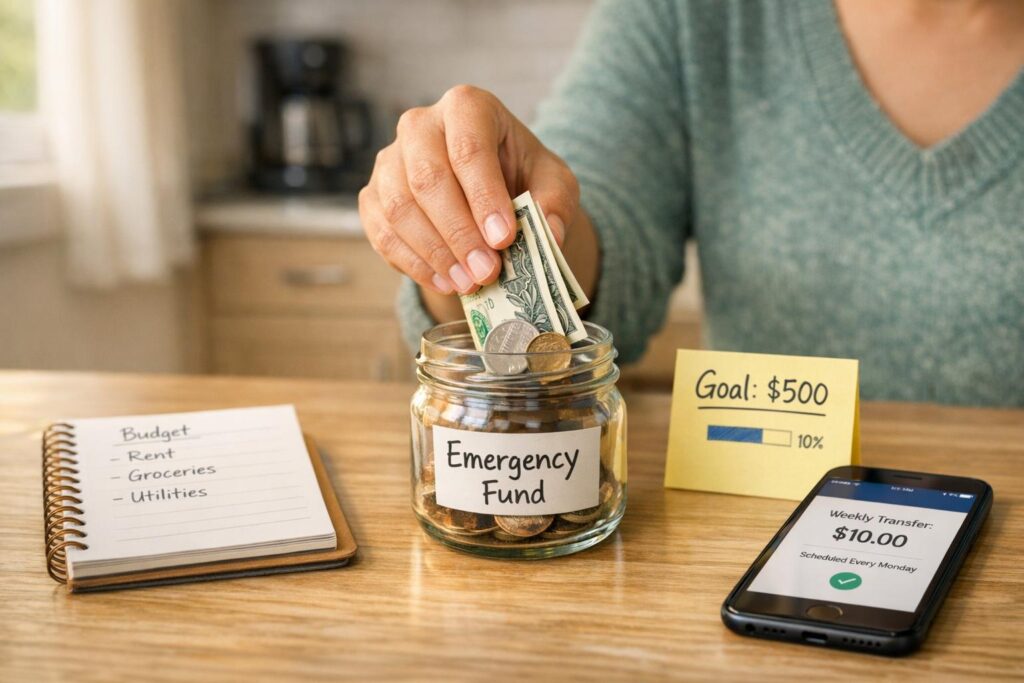
Financial experts often call an emergency fund the “bedrock” of a healthy financial life. Unlike targeted savings for a vacation or a new car, an emergency fund is a pool of liquid cash set aside specifically for life’s unexpected curveballs—job loss, urgent medical procedures, or major home repairs.
Building this safety net from scratch can feel overwhelming, especially when inflation and daily expenses compete for every dollar. However, growing your reserves doesn’t always require a massive salary increase; often, it’s about optimizing the flow of money you already have. Here are ten smart, actionable strategies to accelerate your emergency savings while maintaining a sustainable lifestyle.
1. Automate the “Pay Yourself First” Principle
The most significant barrier to saving is human psychology. If we wait until the end of the month to save what is “left over,” we often find there is nothing left. The most effective way to grow your fund is to automate the process.
Set up a recurring transfer from your checking account to a dedicated savings account the day after your paycheck hits. By treating savings as a non-negotiable “bill” that must be paid first, you remove the temptation to spend those funds on discretionary items.
2. Utilize High-Yield Savings Accounts (HYSA)
Not all savings accounts are created equal. Traditional brick-and-mortar banks often offer interest rates as low as 0.01%. In contrast, online-only banks frequently offer High-Yield Savings Accounts with rates that are significantly higher.
While an HYSA won’t make you rich overnight, the power of compound interest ensures that your money works for you. Over time, the difference between a standard account and an HYSA can result in hundreds, or even thousands, of extra dollars in your emergency fund—all without you lifting a finger.
3. Implement the “Windfall Rule”
A windfall is any unexpected influx of cash. This could be a tax refund, a performance bonus at work, a birthday gift, or even a rebate check.
Instead of treating a windfall as “free money” for a luxury purchase, commit to the 70/30 Rule: Put 70% of the windfall directly into your emergency savings and use the remaining 30% for whatever you like. This allows you to boost your progress significantly while still enjoying a small reward.
4. Audit Your Recurring Subscriptions
In the modern digital economy, “subscription creep” is a common financial drain. Small monthly charges for streaming services, apps, gym memberships, or software can quietly sap your ability to save.
Perform a quarterly audit of your bank statements. Identify services you haven’t used in the last 30 days and cancel them immediately. Redirect the exact amount of those canceled subscriptions into your emergency fund. If you cancel a $15/month streaming service, set up an automated $15 monthly transfer to your savings.
5. Adopt the 24-Hour Rule for Discretionary Spending
Impulse buying is the enemy of the emergency fund. To combat this, implement a mandatory 24-hour waiting period for any non-essential purchase over a certain threshold (e.g., $50).
This cooling-off period allows the initial dopamine hit of shopping to fade, giving you the clarity to decide if the item is a “want” or a “need.” More often than not, you’ll find the urge to buy has passed, and that money can stay in your pocket—or better yet, go into your savings.
6. Round Up Your Daily Transactions
Many modern banking apps and fintech tools offer “round-up” features. Every time you use your debit card, the app rounds the transaction to the nearest dollar and moves the change into a savings sub-account.
For example, a $4.40 coffee becomes a $5.00 transaction, with $0.60 going to savings. While these amounts seem trivial, they can add up to a substantial sum over a year. It’s a “painless” way to save because the impact on your daily cash flow is virtually unnoticeable.
7. Leverage Cash-Back and Rewards Programs
If you are disciplined with credit card use and pay your balance in full every month, cash-back rewards can be a strategic tool for your emergency fund.
Instead of using your points for travel or gift cards, many providers allow you to redeem rewards as a statement credit or a direct deposit. By funneling these “rewards” directly into your emergency savings, you are essentially generating savings out of your necessary, everyday spending on groceries and fuel.
8. Challenge Your Utility and Insurance Costs
Fixed costs aren’t always as fixed as they seem. Once a year, spend a morning shopping around for better rates on car insurance, homeowners’ insurance, or internet packages.
Simply calling your current provider and asking for a loyalty discount or mentioning a competitor’s lower price can often result in a lower monthly bill. Take the difference between your old premium and your new, lower premium and automate that “found money” into your savings account.
9. Sell Underutilized Assets
Most households have hundreds of dollars worth of “dead capital” sitting in closets, garages, or drawers. This includes old electronics, designer clothing you no longer wear, or fitness equipment gathering dust.
Platforms like eBay, Poshmark, or local marketplaces make it easier than ever to liquidate these items. Treat the proceeds of these sales as a one-time injection into your emergency fund rather than spending money.
10. Seasonal “Spending Fasts”
Consider doing a “No-Spend Month” once or twice a year. During this month, you commit to spending money only on essentials like rent, utilities, and basic groceries.
By cutting out dining out, entertainment, and shopping for 30 days, you can often identify areas where you were overspending. The surplus generated during this month can provide a massive “jumpstart” to an empty or lagging emergency fund.
Conclusion: The Psychological Power of the Buffer
Building an emergency fund is as much about peace of mind as it is about math. Financial stress is one of the leading causes of anxiety globally. By following these ten smart strategies, you aren’t just accumulating digits in a bank account; you are buying yourself the freedom to navigate life’s crises without falling into high-interest debt.
Start small. Whether it’s $5 a week or 1% of your paycheck, the most important step is to begin. Once the habit is established, you can scale your efforts, knowing that you have a solid financial fortress standing between you and the unexpected.
Note on Safety: Always ensure your emergency fund is kept in a liquid account. While investing in stocks or ETFs is great for long-term wealth, an emergency fund should be easily accessible (liquid) so you can withdraw the cash immediately when a crisis strikes.