
The world of investing has undergone a massive shift. In 2026, the markets are more dynamic than ever, driven by rapid AI integration, fluctuating labor trends, and a “new normal” for interest rates. To succeed today, you cannot simply rely on “gut feelings” or social media hype. Professional stock analysis is a disciplined craft that balances cold, hard numbers with the nuanced story behind a company’s vision.
Whether you are a seasoned investor or just starting your journey, learning to analyze stocks like a pro will give you the confidence to navigate volatility and build long-term wealth.
1. The Two Pillars: Fundamental vs. Technical Analysis
Professional analysts generally use two distinct lenses to view a stock. While some prefer one over the other, the “pros” often combine them for a 360-degree view.
Fundamental Analysis: “What to Buy”
Fundamental analysis is the process of determining a stock’s intrinsic value. By looking at a company’s financial health, management, and market position, you can decide if the current share price is a bargain or a trap.
Technical Analysis: “When to Buy”
Technical analysis ignores the company’s business model and focuses entirely on price action and volume. It uses charts and mathematical indicators to predict future price movements based on historical patterns.
2. Quantitative Analysis: Mastering the Ratios
Numbers don’t lie, but they do require interpretation. To analyze a stock like a pro, you must look beyond the “ticker price” and dive into the financial statements: the Balance Sheet, Income Statement, and Cash Flow Statement.
Key Valuation Ratios
- Price-to-Earnings (P/E) Ratio: This measures how much you are paying for every $1 of profit. In 2026, look for the Forward P/E, which considers next year’s expected earnings rather than just the past.
- PEG Ratio (Price/Earnings to Growth): A P/E of 20 might seem high, but if the company is growing at 40% per year, it’s actually a steal. A PEG ratio below 1.0 is often considered a sign of an undervalued growth stock.
- Price-to-Book (P/B) Ratio: Ideal for capital-intensive industries (like banking or manufacturing), this compares the market value to the company’s net assets.
Profitability and Health Ratios
- Return on Equity (ROE): This shows how effectively management is using investors’ money to generate profit. Professionals look for a consistent ROE above 15%.
- Debt-to-Equity (D/E) Ratio: In a mid-interest rate environment like 2026, companies with too much debt are risky. Aim for a D/E ratio below 1.0 unless the industry (like utilities) typically carries higher leverage.
- Free Cash Flow (FCF): Cash is king. FCF is the money left over after a company pays for its operations and capital expenditures. It is the fuel for dividends and innovation.
3. Qualitative Analysis: The “Moat” and the Management
While ratios give you the “what,” qualitative analysis gives you the “why.” You are looking for a company’s Economic Moat—a term popularized by Warren Buffett that refers to a business’s ability to maintain competitive advantages.
Assessing the Competitive Advantage
- Brand Power: Can the company raise prices without losing customers? (e.g., Apple or Coca-Cola).
- Network Effect: Does the service become more valuable as more people use it? (e.g., LinkedIn or Amazon).
- Cost Leadership: Can they produce goods cheaper than anyone else? (e.g., Walmart).
- Switching Costs: How hard is it for a customer to leave? (e.g., enterprise software like Salesforce).
The Management Factor
A great business can be ruined by poor leadership. Research the CEO’s track record. Are they transparent in their earnings calls? Do they have “skin in the game” (owning a significant amount of stock)? In 2026, professional analysts also scrutinize a company’s AI Strategy—not just if they use AI, but if they are using it to drive actual productivity and margin expansion.
4. Understanding the Macro Environment
No stock exists in a vacuum. The broader economy (Macro) acts as the tide that lifts or sinks all boats.
- Interest Rates: When the Federal Reserve cuts rates, growth stocks usually flourish because borrowing becomes cheaper. When rates rise, value stocks and banks often perform better.
- Inflation and Labor: Keep an eye on wage growth. In the current 2026 cycle, labor shortages can squeeze profit margins for service-based companies.
- Geopolitics: Trade policies and international stability affect supply chains. Pros diversify geographically to mitigate these risks.
5. Sentiment and Technical Trends
Even a fundamentally perfect stock can see its price drop if the “market sentiment” is bearish.
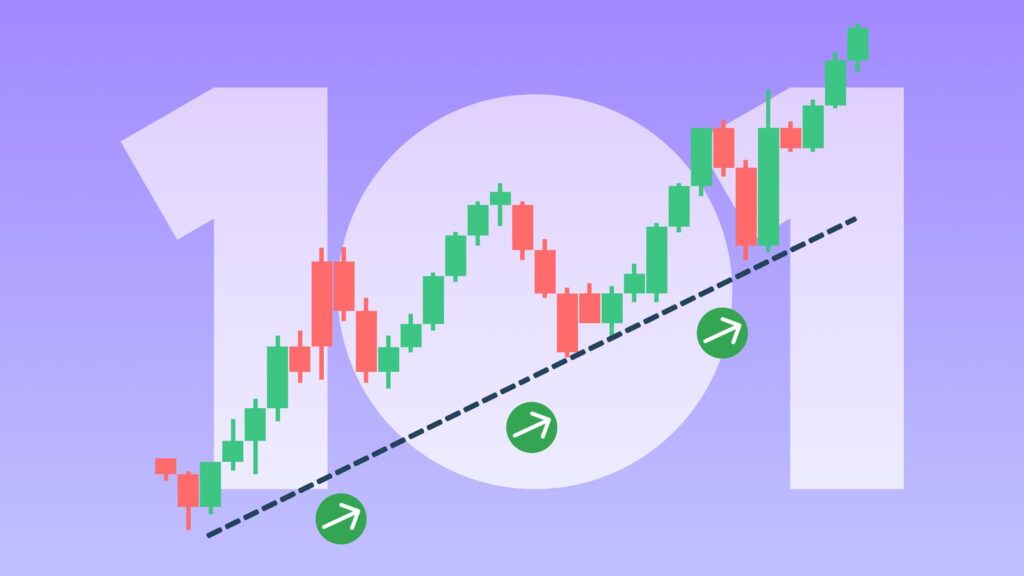
Trend Lines and Support/Resistance
Pros look for Support levels (where the price usually stops falling) and Resistance levels (where it usually stops rising).
Pro Tip: If a stock breaks above a long-term resistance level on high volume, it is often a “breakout” signal that more gains are coming.
The Power of Volume
Volume is the fuel. If a stock’s price is rising but the trading volume is low, the move might be “fake” or weak. A price surge accompanied by massive volume indicates that institutional “big money” is buying in.
6. Common Pitfalls to Avoid
Even the pros make mistakes, but they learn to minimize them.
- The Sunk Cost Fallacy: Don’t hold onto a losing stock just because you’ve already lost money. If the fundamentals have changed, sell.
- Confirmation Bias: Don’t only look for news that supports your “buy” thesis. Actively look for reasons why you might be wrong.
- Chasing Hype: In 2026, “AI” is the biggest buzzword. Ensure the company is actually generating revenue from technology, not just mentioning it in a press release.
7. Putting It All Together: Your Checklist
To analyze a stock like a pro, follow this systematic workflow:
- Screen: Use a stock screener to filter by P/E, market cap, and sector.
- Verify: Check the last three years of revenue and net income. Are they growing?
- Moat Check: Identify the competitive advantage.
- Technical Check: Look at the 50-day and 200-day moving averages. Is the trend up or down?
- Margin of Safety: Only buy if the stock is trading at a discount to your calculated intrinsic value.
Conclusion
Analyzing stocks like a pro is a marathon, not a sprint. It requires a blend of mathematical precision, psychological discipline, and a constant curiosity about how the world works. By mastering both the quantitative ratios and the qualitative stories, you position yourself to not just play the market, but to understand it.