The financial world is rarely a calm sea. In April 2026, global markets find themselves at a fascinating crossroads. With the S&P 500 recently testing new heights around 7,500 and the rapid integration of Artificial Intelligence (AI) reshaping corporate earnings, the “oscillation” of prices—better known as volatility—has become a daily companion for investors.
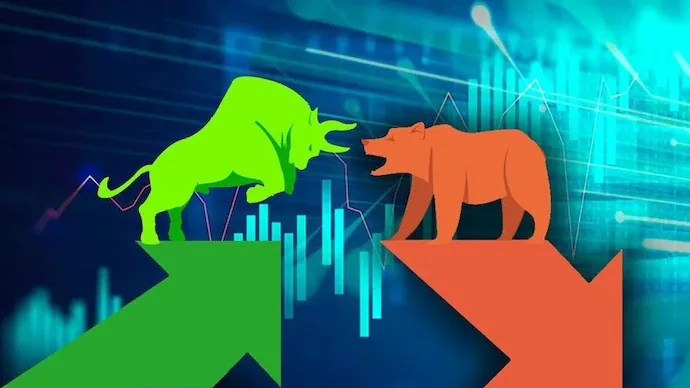
But how should one view these fluctuations? Is a sudden 5% drop a signal to retreat (a threat), or is it a clearance sale for the disciplined investor (an opportunity)? Understanding the dual nature of volatility is the first step toward long-term financial resilience.
1. Understanding Volatility: The Market’s Heartbeat
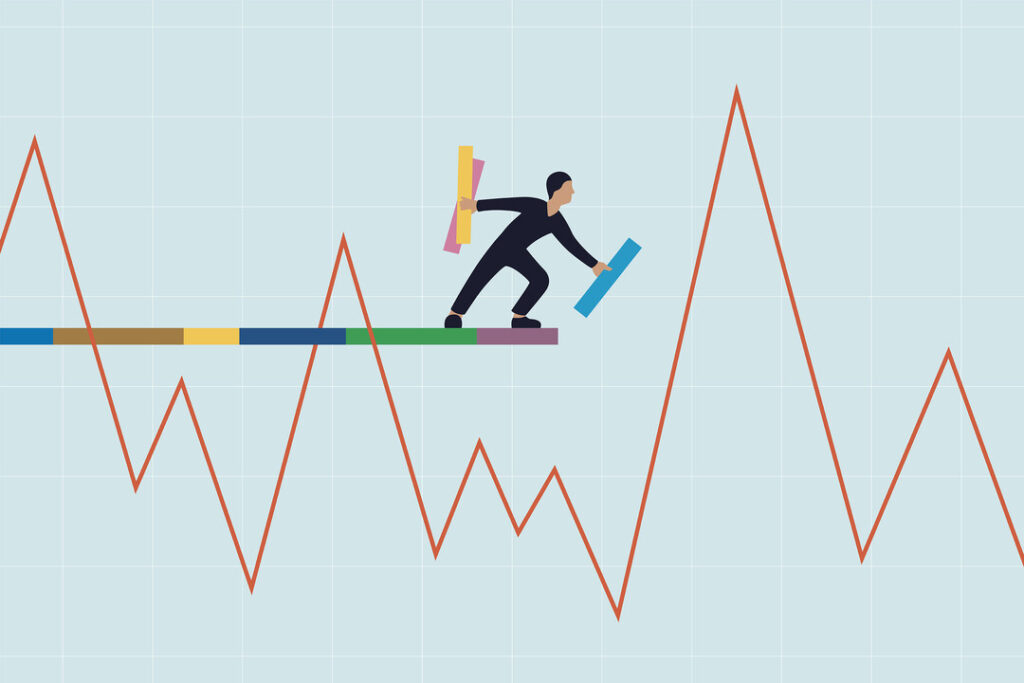
In technical terms, volatility refers to the statistical measure of the dispersion of returns for a given security or market index. In simpler terms, it is the speed and intensity of price changes. High volatility means prices swing wildly in either direction, while low volatility suggests a more stable, steady trend.
Why is Volatility High in 2026?
Several factors are currently driving market swings:
- The AI Narrative: While AI remains a massive tailwind, the market has become more “discerning.” Investors are no longer rewarding every company with an AI pitch; they are looking for realized productivity gains, leading to sharp corrections for underperformers.
- Geopolitical Shifts: Trade policies and shifting global alliances continue to create “shocks” that the market must digest in real-time.
- Monetary Policy Uncertainty: As central banks balance disinflation with growth, any hint of “higher-for-longer” interest rates can trigger immediate repricing.
2. Volatility as a Threat: The Psychological Trap
For most, volatility feels like a threat because it challenges our fundamental desire for security. When a portfolio “turns red,” the biological “fight or flight” response often kicks in.
The Risk of Emotional Decisions
The greatest threat volatility poses isn’t the drop in price itself, but the behavioral reaction to it.
- Panic Selling: Selling at the bottom locks in losses and prevents investors from participating in the eventual recovery.
- Sequence-of-Returns Risk: For those nearing retirement, a volatile downturn just as they begin withdrawals can significantly impact the longevity of their savings.
- Margin Calls: For leveraged investors, high volatility can force the liquidation of positions at the worst possible time.
Note: History shows that the market’s worst days are often followed very closely by its best days. Missing just a handful of those “best days” can drastically reduce long-term returns.
3. Volatility as an Opportunity: The Strategic Advantage
For the disciplined investor, volatility is not a bug; it’s a feature. It is the mechanism that creates mispricing, allowing you to buy high-quality assets at a discount.
Dollar-Cost Averaging (DCA)
Volatility is a gift for those in the “accumulation phase.” If you invest a fixed amount every month, you naturally buy more shares when prices are low and fewer when they are high. This lowers your average cost basis over time without the need to “time the market.”
Rebalancing: The “Buy Low, Sell High” Engine
When volatility causes one asset class (like stocks) to drop, your portfolio’s allocation shifts. Rebalancing involves selling some of your “safer” assets (like bonds or cash) to buy the depressed stocks.
- The Result: You are forced to buy low and sell high by following a systematic process rather than an emotional impulse.
Tax-Loss Harvesting
Market dips allow investors to sell losing positions to realize a capital loss. These losses can be used to offset capital gains elsewhere, potentially reducing your overall tax burden while you reinvest the proceeds into similar assets to maintain market exposure.
4. Practical Strategies for 2026
Navigating the current landscape requires a blend of traditional wisdom and modern adaptability.
Diversification and Quality
In a “K-shaped” economy, the gap between winners and losers widens.
- Focus on Quality: Look for companies with strong balance sheets, consistent cash flows, and “moats” that protect them from disruption.
- Asset Ballast: Diversifying into “defensive” sectors like Healthcare or Consumer Staples—and maintaining a position in “safe havens” like Gold—can provide a buffer when equity markets get rocky.
The “Cash Buffer”
Having a liquid emergency fund or a “cash bucket” ensures you never have to sell your stocks to pay for life’s unexpected expenses during a market downturn. This provides the “emotional capital” needed to stay invested.
5. Comparison: Threat vs. Opportunity
| Feature | Volatility as a Threat | Volatility as an Opportunity |
| Perspective | Short-term focused | Long-term focused |
| Action | Reactive (Panic Selling) | Proactive (Rebalancing/DCA) |
| Outcome | Locked-in losses | Lowered cost basis |
| Primary Goal | Capital preservation | Wealth accumulation |
Conclusion: Perspective is Everything
Is stock market volatility a threat or an opportunity? The answer depends entirely on your time horizon and your temperament.
For the speculator looking to make a quick profit, volatility is a high-stakes threat that can lead to ruin. For the long-term investor, volatility is the “price of admission” for the superior returns that equities historically provide.
As we navigate the complexities of 2026, the goal shouldn’t be to avoid volatility, but to build a portfolio—and a mindset—that can withstand it. Remember, the market doesn’t ring a bell at the bottom. The best time to have a plan for volatility is before it happens.
Disclaimer: This article is for informational purposes only and does not constitute financial, legal, or investment advice. Always consult with a qualified professional before making significant financial decisions.