The allure of the stock market lies in its potential for wealth creation. However, the volatility that provides opportunity also carries significant risk. For any investor aiming for long-term success, mastering risk management is not just a secondary skill—it is the foundation of a sustainable portfolio. Without a robust risk management framework, even the most sophisticated investment strategy can be derailed by a single market downturn or a poorly timed trade.
Risk management in the stock market involves identifying, analyzing, and mitigating the uncertainty in investment decisions. It is the process of ensuring that your losses remain manageable while your gains are allowed to compound over time.
Understanding the Types of Investment Risk
Before implementing mitigation strategies, it is crucial to understand the two primary categories of risk that affect equity investors:
1. Systematic Risk (Market Risk)
Systematic risk refers to the “unpredictable” risks that affect the entire market or a large segment of it. These are external factors that an investor cannot avoid by simply picking different stocks.
- Interest Rate Risk: Changes in central bank policies can impact corporate borrowing costs and consumer spending.
- Inflation Risk: Rising prices erode the purchasing power of future cash flows.
- Geopolitical Risk: Wars, trade disputes, and political instability can trigger sudden market wide sell-offs.
2. Unsystematic Risk (Specific Risk)
This is the risk associated with a specific company or industry. Unlike systematic risk, unsystematic risk can be mitigated through diversification.
- Business Risk: Poor management decisions or a decline in product demand.
- Financial Risk: A company’s inability to service its debt or maintain liquidity.
- Regulatory Risk: New laws or government investigations targeting a specific sector.
Core Strategies for Risk Mitigation
To protect capital, investors must employ a multi-layered approach to risk. Here are the most effective strategies used by professionals:
Portfolio Diversification
Diversification is often called the “only free lunch” in investing. By spreading capital across different asset classes (stocks, bonds, real estate), sectors (technology, healthcare, energy), and geographic regions, you reduce the impact of any single underperforming asset.
Asset Allocation
Asset allocation is the process of deciding how to divide your portfolio among different asset categories. This decision should be based on your time horizon and risk tolerance. A younger investor might favor a higher percentage of equities for growth, while someone nearing retirement might shift toward fixed-income securities to preserve capital.
The Use of Stop-Loss Orders
A stop-loss order is an automated instruction to sell a stock when it reaches a specific price. This tool removes emotional decision-making from the process. If a stock drops 10% below your purchase price, the stop-loss triggers, preventing a minor setback from becoming a catastrophic loss.
The Role of Technical and Fundamental Analysis
Effective risk management requires a blend of quantitative and qualitative evaluation.
Fundamental Analysis: The Safety Margin
Fundamental analysis involves examining a company’s financial statements, management quality, and competitive position. The goal is to determine the “intrinsic value” of a stock. Risk management enters this process through the Margin of Safety. This concept, popularized by Benjamin Graham, suggests only buying a stock when its market price is significantly below its intrinsic value, providing a buffer against errors in estimation or unforeseen market fluctuations.
Technical Analysis: Identifying Trends
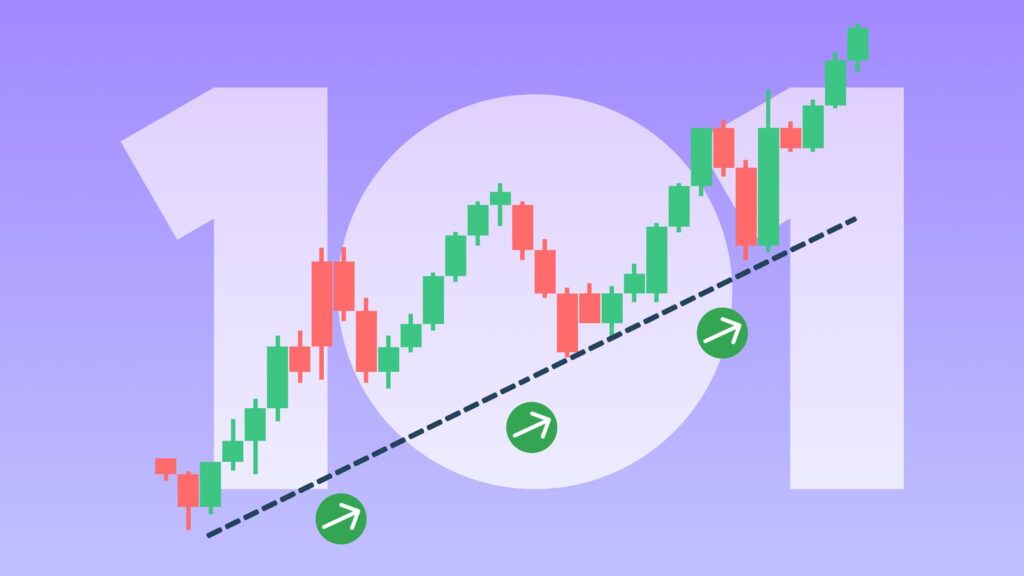
Technical analysis uses historical price movements and volume data to predict future price action. Indicators like the Moving Average or the Relative Strength Index (RSI) can help investors identify when a market is overbought (increasing risk) or oversold (presenting opportunity).
Psychological Risk: Managing Human Emotion
Perhaps the most overlooked aspect of risk management is the psychological one. Human beings are prone to cognitive biases that can lead to poor financial decisions.
- Loss Aversion: The pain of losing $1,000 is often felt more intensely than the joy of gaining $1,000. This leads investors to hold onto losing stocks for too long, hoping they will “break even.”
- FOMO (Fear of Missing Out): This drives investors to buy into “bubbles” at peak prices, significantly increasing the risk of a sharp reversal.
- Confirmation Bias: Seeking out only information that supports your existing investment thesis while ignoring warning signs.
Successful risk management requires a disciplined, rules-based approach that minimizes the influence of these emotions.
Advanced Risk Management Tools
For more experienced investors, certain financial instruments can act as “insurance” for a portfolio.
Hedging with Options
Options contracts allow investors to hedge against potential losses. For example, buying a Put Option gives you the right to sell a stock at a predetermined price, effectively setting a floor on how much you can lose if the stock price crashes.
Position Sizing
Position sizing determines how much of your total capital you allocate to a single trade. A common rule of thumb is the 2% Rule, which states that an investor should never risk more than 2% of their total account value on any single trade. This ensures that even a string of losses will not deplete the entire portfolio.
Risk Management in Different Market Environments
Risk management is not a “set it and forget it” task. It must evolve with market conditions.
- Bull Markets: During periods of sustained growth, the primary risk is complacency. Investors often take on too much leverage or abandon diversification. Regular rebalancing—selling winners and buying underperformers to maintain your target asset allocation—is essential.
- Bear Markets: In a downturn, liquidity becomes the priority. Maintaining a cash reserve allows you to cover personal expenses without being forced to sell stocks at the bottom of the market.
- Volatile Markets: High volatility requires wider stop-losses or reduced position sizes to avoid being “stopped out” by normal price fluctuations.
Conclusion: The Path to Consistent Returns
Risk management is the silent partner of every successful investor. While it may not be as exciting as identifying the next “unicorn” stock, it is the discipline that ensures you stay in the game long enough to benefit from the power of compounding. By diversifying assets, utilizing stop-losses, maintaining a margin of safety, and managing emotional impulses, you can navigate the complexities of the stock market with confidence.
Investing is a marathon, not a sprint. The goal isn’t just to make money today, but to protect and grow your capital over decades. A well-executed risk management strategy is what makes that possible.
Would you like me to create a checklist for a daily risk assessment or perhaps a separate guide on how to calculate the Margin of Safety for a specific stock?